
13 photos: Bernie Sanders' political career
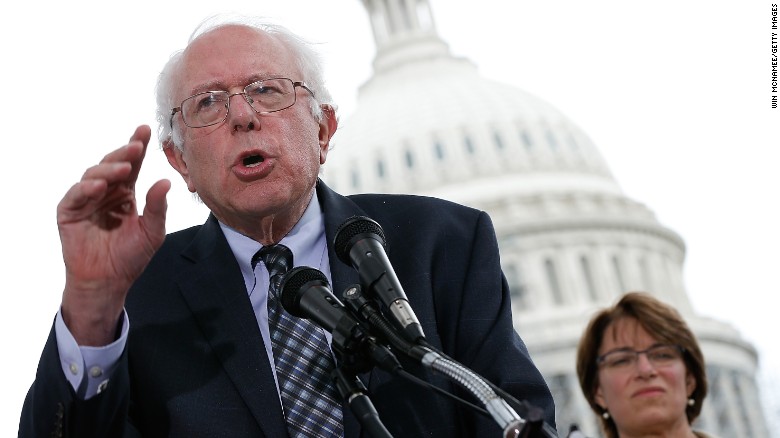
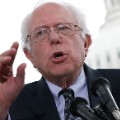
On September 8, 2014, Sanders speaks outside the U.S. Capitol at a press conference where members of Congress discuss a joint resolution proposing a constitutional amendment relating to contributions and expenditures intended to affect elections.
Hide Caption
7 of 13
13 photos: Bernie Sanders' political career
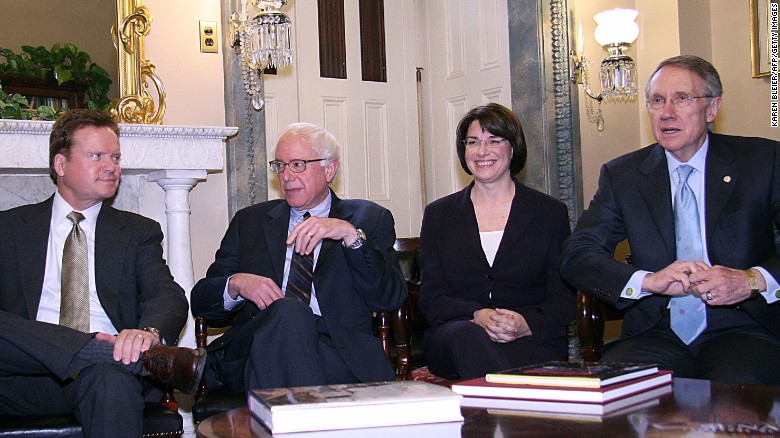
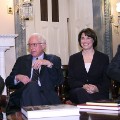
Then-senator-elect Bernie Sanders meets with 2006 Senate Minority Leader Harry Reid (right) on November 13, 2006, in Washington, D.C. On his left is then-senator-elect James Webb and on his right is then-senator-elect Amy Klobuchar.
Hide Caption
8 of 13
13 photos: Bernie Sanders' political career
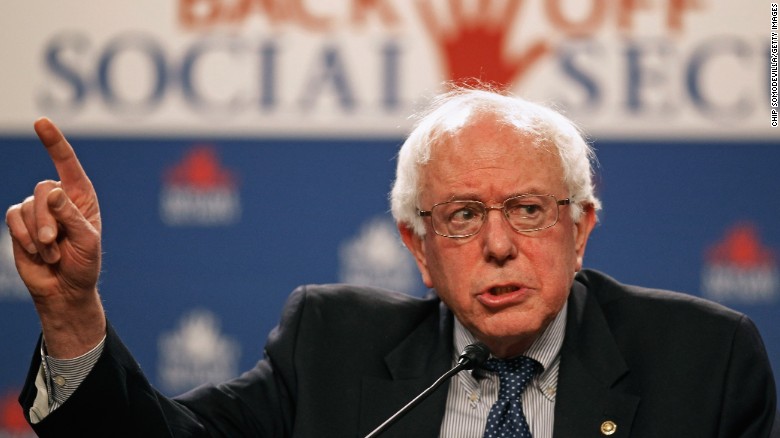
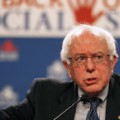
Sanders addresses a rally in support of Social Security on March 28, 2011, on Capitol Hill.
Hide Caption
9 of 13
13 photos: Bernie Sanders' political career
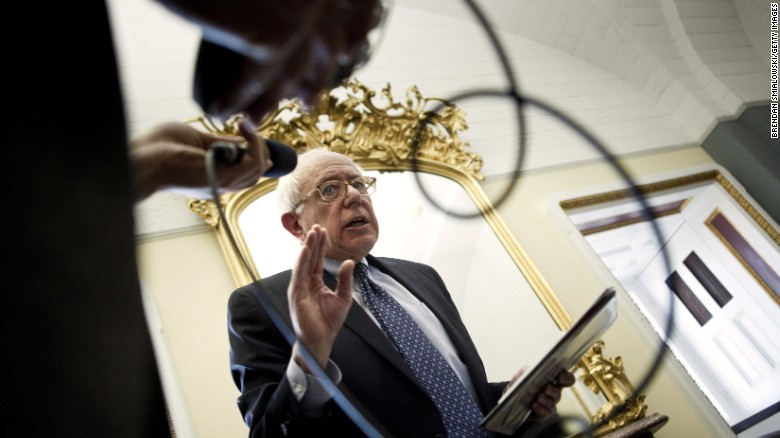
Sanders speaks to reporters on Capitol Hill on December 7, 2010, about how the Obama administration is pushing for Congress to extend Bush-era tax cuts in a compromise with Republicans.
Hide Caption
10 of 13
13 photos: Bernie Sanders' political career
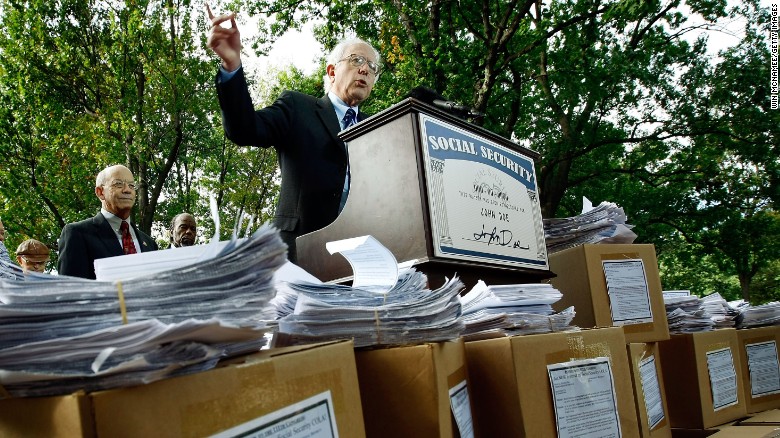
Sanders speaks at a news conference in Washington on September 30, 2009, to urge Congress to pass a $250 one-time cost of living adjustment payment to Social Security recipients in 2010.
Hide Caption
11 of 13
13 photos: Bernie Sanders' political career
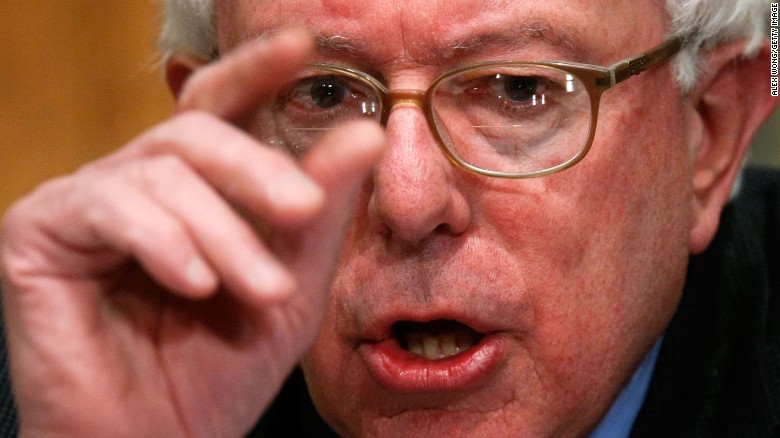
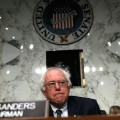
Sanders speaks during a hearing on the economy before the Senate Budget Committee on Capitol Hill on March 3, 2009.
Hide Caption
12 of 13
13 photos: Bernie Sanders' political career
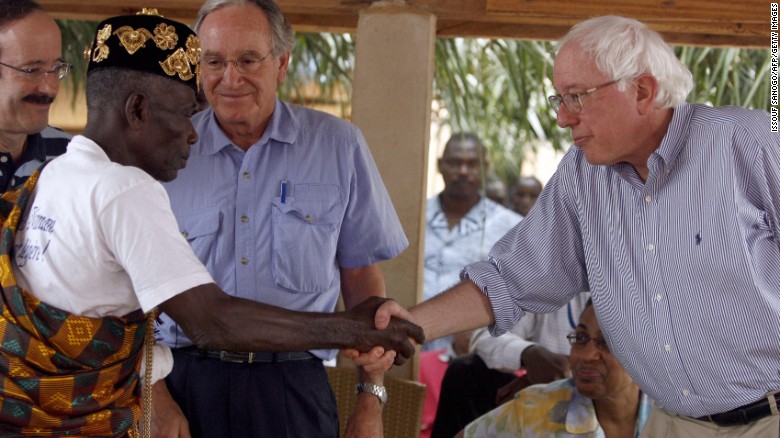
Incoming Sens. James Webb, from left, Sanders, and Amy Klobuchar meet with Senate Minority Leader Harry Reid on November 13, 2006, in Washington.
Hide Caption
13 of 13
13 photos: Bernie Sanders' political career
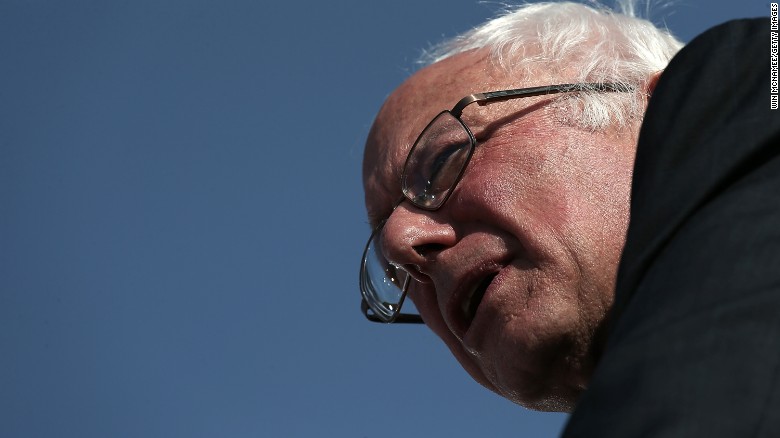
Democratic presidential candidate U.S. Sen. Bernie Sanders (I-VT) delivers remarks while officially announcing his candidacy for the U.S. presidency during an event at Waterfront Park May 26 in Burlington, Vermont.
Hide Caption
1 of 13
13 photos: Bernie Sanders' political career
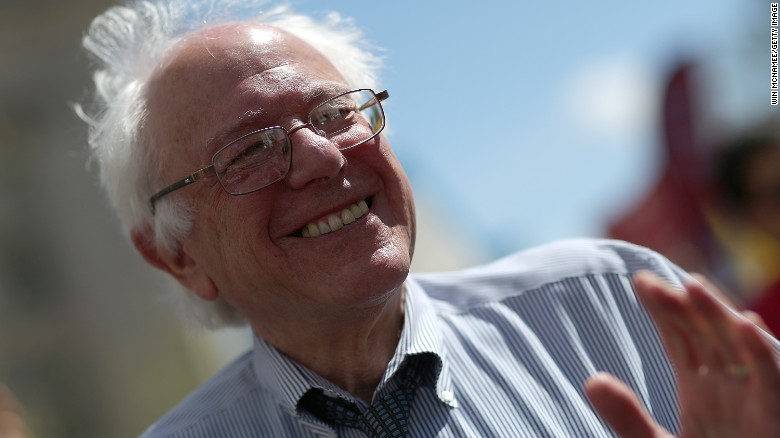
Sanders participates in a "Don't Trade Our Future" march organized by the group Campaign for America's Future on April 20 in Washington. Click through for other photos from his career.
Hide Caption
2 of 13
13 photos: Bernie Sanders' political career
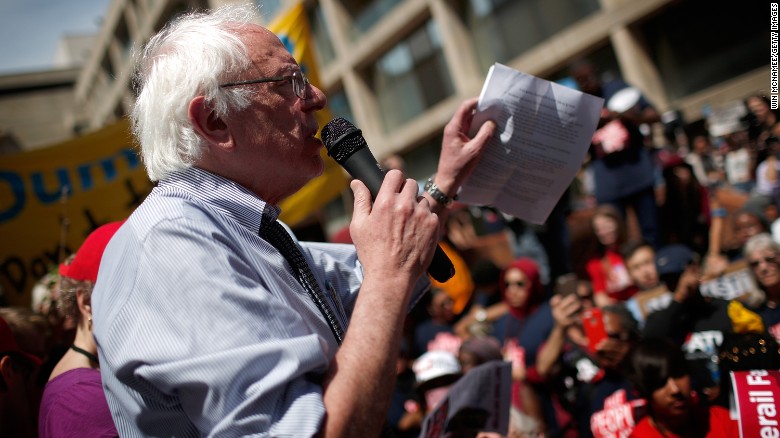
Sanders speaks to protesters taking part in the "Don't Trade Our Future" march on April 20.
Hide Caption
3 of 13
13 photos: Bernie Sanders' political career
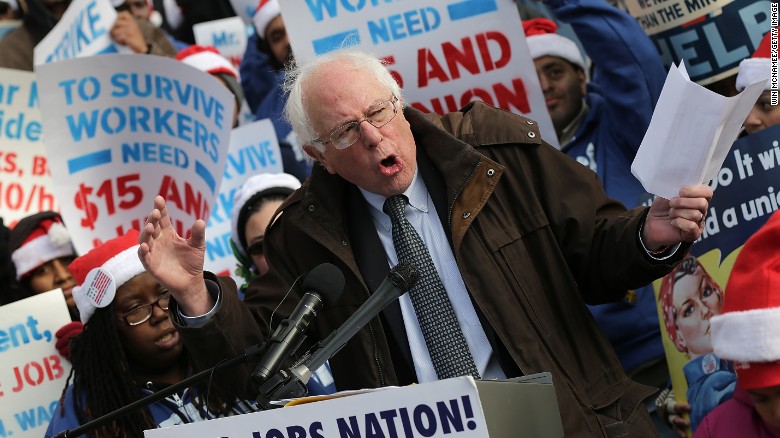
Sanders speaks to low-wage federal contract workers during a protest where the workers demanded presidential action to win a wage increase to $15 an hour on December 4, 2014, in Washington.
Hide Caption
4 of 13
13 photos: Bernie Sanders' political career
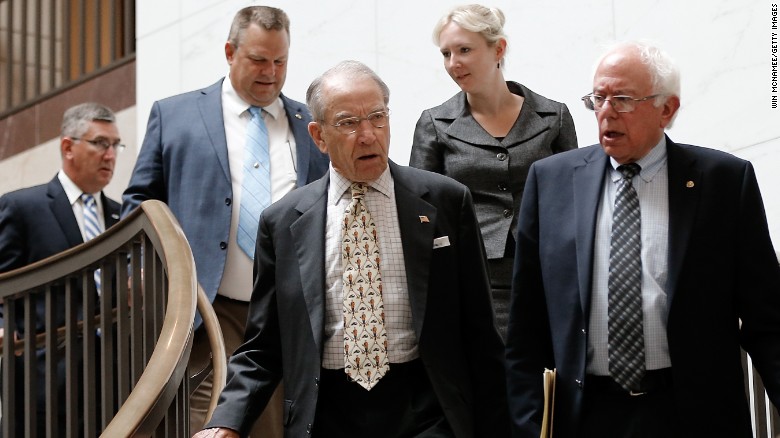
Sanders, left, and Sen. Charles Grassley of Iowa arrive with other senators for a briefing at the U.S. Capitol on September 11, 2014, by military and intelligence officials for members of the U.S. Senate on the White House strategy to combat ISIS.
Hide Caption
5 of 13
13 photos: Bernie Sanders' political career
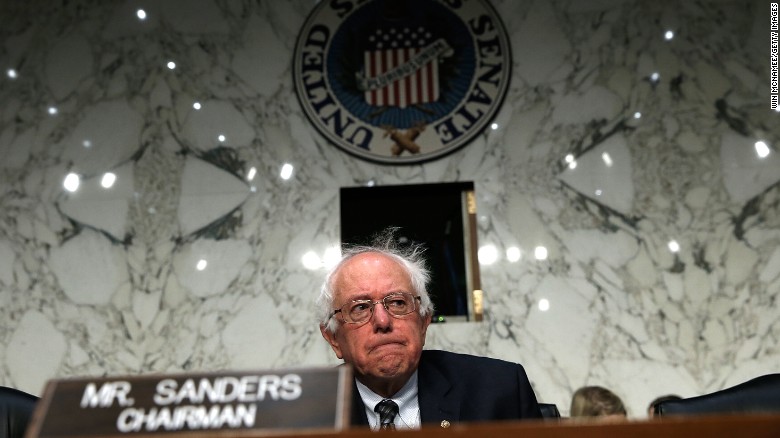
Sanders awaits the start of a hearing on the state of veterans' health care by the Senate Veterans Affairs Committee on September 9, 2014, in Washington.
Hide Caption
6 of 13
13 photos: Bernie Sanders' political career
On September 8, 2014, Sanders speaks outside the U.S. Capitol at a press conference where members of Congress discuss a joint resolution proposing a constitutional amendment relating to contributions and expenditures intended to affect elections.
Hide Caption
7 of 13
13 photos: Bernie Sanders' political career
Then-senator-elect Bernie Sanders meets with 2006 Senate Minority Leader Harry Reid (right) on November 13, 2006, in Washington, D.C. On his left is then-senator-elect James Webb and on his right is then-senator-elect Amy Klobuchar.
Hide Caption
8 of 13
13 photos: Bernie Sanders' political career
Sanders addresses a rally in support of Social Security on March 28, 2011, on Capitol Hill.
Hide Caption
9 of 13
13 photos: Bernie Sanders' political career
Sanders speaks to reporters on Capitol Hill on December 7, 2010, about how the Obama administration is pushing for Congress to extend Bush-era tax cuts in a compromise with Republicans.
Hide Caption
10 of 13
13 photos: Bernie Sanders' political career
Sanders speaks at a news conference in Washington on September 30, 2009, to urge Congress to pass a $250 one-time cost of living adjustment payment to Social Security recipients in 2010.
Hide Caption
11 of 13
13 photos: Bernie Sanders' political career
Sanders speaks during a hearing on the economy before the Senate Budget Committee on Capitol Hill on March 3, 2009.
Hide Caption
12 of 13
13 photos: Bernie Sanders' political career
Incoming Sens. James Webb, from left, Sanders, and Amy Klobuchar meet with Senate Minority Leader Harry Reid on November 13, 2006, in Washington.
Hide Caption
13 of 13
13 photos: Bernie Sanders' political career
Democratic presidential candidate U.S. Sen. Bernie Sanders (I-VT) delivers remarks while officially announcing his candidacy for the U.S. presidency during an event at Waterfront Park May 26 in Burlington, Vermont.
Hide Caption
1 of 13
13 photos: Bernie Sanders' political career
Sanders participates in a "Don't Trade Our Future" march organized by the group Campaign for America's Future on April 20 in Washington. Click through for other photos from his career.
Hide Caption
2 of 13
13 photos: Bernie Sanders' political career
Sanders speaks to protesters taking part in the "Don't Trade Our Future" march on April 20.
Hide Caption
3 of 13
13 photos: Bernie Sanders' political career
Sanders speaks to low-wage federal contract workers during a protest where the workers demanded presidential action to win a wage increase to $15 an hour on December 4, 2014, in Washington.
Hide Caption
4 of 13
13 photos: Bernie Sanders' political career
Sanders, left, and Sen. Charles Grassley of Iowa arrive with other senators for a briefing at the U.S. Capitol on September 11, 2014, by military and intelligence officials for members of the U.S. Senate on the White House strategy to combat ISIS.
Hide Caption
5 of 13
13 photos: Bernie Sanders' political career
Sanders awaits the start of a hearing on the state of veterans' health care by the Senate Veterans Affairs Committee on September 9, 2014, in Washington.
Hide Caption
6 of 13
13 photos: Bernie Sanders' political career
On September 8, 2014, Sanders speaks outside the U.S. Capitol at a press conference where members of Congress discuss a joint resolution proposing a constitutional amendment relating to contributions and expenditures intended to affect elections.
Hide Caption
7 of 13




Story highlights
- Sally Kohn: CNN debate to reveal subtle differences on issues and maybe bigger ones on personality
- It's Bernie Sanders' debate to lose on Tuesday, Kohn says
- Kohn: But Hillary Clinton can also win if she plays it right
Sally Kohn is an activist, columnist and television commentator. Follow her on Twitter: @sallykohn. The opinions expressed in this commentary are hers.
(CNN)Without remotely the same level of name recognition, campaign infrastructure or media spotlight, Sen. Bernie Sanders has already posed a significant challenge to Hillary Clinton's campaign for the Democratic presidential nomination. Just imagine what Tuesday's nationally televised debate, hosted by CNN, could do.

Sally Kohn
The underdog Sanders leads Clinton in the early primary state of New Hampshire and is within striking distance in Iowa, although he continues to trail the former secretary of state by double digits among Democrats nationally.
Arguably, Sanders' popularity among Democratic voters is fueled as much by who Sanders isn't as who he is: His populist positions and regular-guy disposition stand out in contrast with the chronically calculating and centrist Clinton.
And this debate is his to lose: Just by showing up on the same stage as the presumptive front-runner and showing a wider audience that he can substantively and stylistically challenge Clinton, Sanders gains.


Can Hillary Clinton win over New Hampshire? 02:30
But what about Clinton? She wants to avoid a protracted fight for the Democratic nomination, not to mention the sort of upset she suffered at the hands of Barack Obama in 2008. So it's in her best interest to brush aside Sanders as soon as possible. The first Democratic primary debate is her earliest and best opportunity to do so. How?
Look for Clinton to employ three strategies.
First, she'll likely try to lump her positions in with those of Sanders (and the other Democratic contenders) and say that all of the Democratic candidates mainly share the same vision and the party's best interest is served by picking the one with the best shot at being elected.
Electability is Clinton's strongest argument, especially as more and more Democrats become legitimately freaked out by the cast of characters vying for the Republican nomination. It's in Clinton's interest to de-emphasize the ideological differences on the Democratic side and imply more agreement than not -- which is, for the most part, true.

Sanders will try to poke holes in that script, especially with respect to Clinton's economic agenda, which has been rhetorically populist but conventionally centrist in policy terms.
Beyond increasing the minimum wage and supporting job training programs, how will Clinton address the structural inequities that modern capitalism is producing? How will she square her warrior-for-the-middle-class chatter with her history of coziness with Wall Street and big business? And where does she stand on the Trans-Pacific Partnership trade deal?
Sanders and many populist Democrats have opposed the agreement as a giveaway to big business that will hurt American workers. While Clinton tacitly backed the deal while secretary of state, she's now free to express her own opinion separate from the stance of the Obama administration.
Will she ally herself with populist opposition to the trade deal? And even if she does, will people believe her stance is anything more than crass opportunism to win voters fleeing her for Sanders?

Clinton's second strategy will likely be try to highlight ways in which she is more progressive than her Democratic opponents, especially Sanders. The recent mass shooting in Oregon, just days before the debate, yet again brings to the surface the concerns of Democratic voters -- and voters in general -- who are fed up with Congress' failure to pass common-sense gun laws despite overwhelming need and widespread public support.
Here, Clinton can draw a clear contrast with Sanders, who has opposed some gun control measures and is out of step with the majority of Democratic primary voters on this issue. While she may have difficulty demonstrating her sincerity on economic populism, here the contrast with the senator from Vermont is strong -- his weak record on guns is a hard position to defend, especially now.


Bernie Sanders reaching out to black voters 02:08
Similarly, Clinton can try to distinguish herself as more progressive in addressing racial bias and structural racism. Despite Sanders' self-professed position as the most progressive candidate, in speaking about racial justice, police violence and the Black Lives Matter movement, he has been woefully inadequate at best.
Clinton hasn't been much better, with her discussions on race often tainted by an unsettling defensiveness. But she's still clearly more comfortable talking about race than Sanders and has given more thought to how racial injustice poisons America's institutions and culture. Talking about this more in the debate will be good for America -- and good for her candidacy.

Third, look for Clinton to try to connect authentically with viewers at home and show her human side. Many voters may get lost in the substantive back and forth over what Clinton supports versus what Sanders supports and their various policy-based accusations against each other. But elections are also about gut instincts over which candidate shares your values and vision. And those gut instincts are especially triggered when voters see the candidates side by side.
While part of the appeal of Sanders, like part of the appeal of Donald Trump, is ideological -- white racial anxiety and xenophobia in the case of Trump, skepticism about the current economic order in the case of Sanders -- what both share is the refreshing impression of being straight shooters. Trump doesn't hesitate to insult every Mexican. Sanders isn't afraid to call himself a socialist. Both personalities fly in the face of the conventional overly calculated politics that the Clinton brand helped invent.

For her part, Clinton can say all the right things, but if she spouts populist rhetoric while sounding like an out-of-touch patrician, it won't work. That's not to say Clinton should emphasize showing more of her heart and humor, as campaign aides have promised in a retooling. Rather she should just be her damn self and show that to the voters. We don't want a particular personality so much as we want a real person. Hopefully, if nothing else, Trump has taught candidates that.
The first Democratic debate will be pivotal since voters will form first, and perhaps lasting, impressions of how the candidates match up. It is Sanders' debate to lose. But, if she plays it right, it could also be Clinton's debate to win.


- More Promoted Stories
- Insanely Popular Sweatshirt Has a 4 Month Waitlist Business Insider
- The Cameraman Decided To Keep Rolling At The Perfect Moment iDistracted.net
- Top 9 Hottest Female Golfers - #4 Is Going Viral! FitStyleLife.com
More from CNN- Is America Bern-ing? this site


