With Liberal Leader Justin Trudeau absent from the first unofficial debate of the 2019 election campaign, the leaders of Canada’s progressive opposition parties took aim at Conservative Leader Andrew Scheer Thursday night.
While Green party Leader Elizabeth May and NDP Leader Jagmeet Singh are locked in close competition
VAUGHAN, ONT.—Andrew Scheer’s Conservatives maintain a slight lead over their Liberal rivals as the federal campaign kicks off, according to new data from Forum Research.
In a survey of 1,001 Canadian voters Wednesday, Forum found that 36.3 per cent would support the Conservatives if a vote were held today, while 32.4 per cent would vote Liberal. The Greens continue to poll ahead of the NDP with 11.6 per cent, compared to 8.6 support for the New Democrats.
According to Forum’s projections, Wednesday’s results would translate into a Conservative minority government with Scheer’s party taking 168 seats to the Liberals 138. The NDP (16), Bloc Québécois (11) and the Greens (5) would make up the rest of Parliament, with Maxime Bernier’s upstart People’s Party of Canada projected to win no seats.
“On day one, we see the Conservatives resume their lead, but it’s only slight,” said Lorne Bozinoff, the president of Forum Research, in a statement.
“The environment and the economy continue to lead as issues foremost to Canadians right now. How the campaign shifts to match these issues, and how the parties address them, will be fascinating to watch.”
Respondents listed the environment (22.8 per cent) and the economy (22.8 per cent) as their most important issues, followed by health care (15 per cent), taxes (10.5 per cent), and education (8.4 per cent).
The Conservatives have consistently led Justin Trudeau’s Liberal party in Forum’s data for months, although Wednesday’s numbers are a wider lead than Forum’s findings in June and July.
“The change is within the margin of error, (but) it’s in the right direction for the Tories,” Bozinoff said in an interview.
“But what it does show is a point or two change in the numbers makes all the difference in getting to a majority. This race is super close.”
Regional breakdowns, however, suggested that the Conservatives’ stranglehold on Alberta and the Prairies — where the party is expected to dominate in the Oct. 21 vote — inflates their national numbers. According to Forum’s data, the Liberals enjoy a healthy lead in Atlantic Canada and Quebec, and are running neck-and-neck with the Conservatives in Ontario. The Conservatives lead the Liberals by 10 points in British Columbia, with 37 per cent support in a province expected to be important for determining who wins power on Oct. 21.
Forum surveyed a random sample of 1,001 voting aged Canadians on Wednesday. The polling company considers the results accurate within three percentage points, 19 times out of 20.
Get The Lead newsletter
Start getting your whip-smart guide to Canada's 2019 federal election in your inbox.
OTTAWA—A new book arriving on the eve of the federal election campaign is offering policy geeks a comprehensive take on whether Justin Trudeau lived up to his 2015 vows.
At the heart of the 237-page publication — the product of work from two dozen Canadian academics — is an analysis of 353 Liberal pre-election promises and an evaluation of how many have actually been fulfilled since Trudeau’s team took office.
A new 237-page book — the product of work from two dozen Canadian academics — analyzes 353 Liberal pre-election promises and evaluates how many have actually been fulfilled since Prime Minister Justin Trudeau’s team took office in 2015. (DARRYL DYCK / THE CANADIAN PRESS file photo)
A new 237-page book — the product of work from two dozen Canadian academics — analyzes 353 Liberal pre-election promises and evaluates how many have actually been fulfilled since Prime Minister Justin Trudeau’s team took office in 2015. (DARRYL DYCK / THE CANADIAN PRESS file photo)
A new 237-page book — the product of work from two dozen Canadian academics — analyzes 353 Liberal pre-election promises and evaluates how many have actually been fulfilled since Prime Minister Justin Trudeau’s team took office in 2015. (DARRYL DYCK / THE CANADIAN PRESS file photo)
A new 237-page book — the product of work from two dozen Canadian academics — analyzes 353 Liberal pre-election promises and evaluates how many have actually been fulfilled since Prime Minister Justin Trudeau’s team took office in 2015. (DARRYL DYCK / THE CANADIAN PRESS file photo)
A new 237-page book — the product of work from two dozen Canadian academics — analyzes 353 Liberal pre-election promises and evaluates how many have actually been fulfilled since Prime Minister Justin Trudeau’s team took office in 2015. (DARRYL DYCK / THE CANADIAN PRESS file photo)
In short, the experts found that by March of this year Trudeau’s government had entirely followed through on about 50 per cent of its pledges, partially delivered on about 40 per cent and had broken roughly 10 per cent.
The authors say the book — which also features a deep plunge into the weeds of about a dozen key policy areas — will not only interest wonks, like scholars and journalists, but can serve as a primer for all voters ahead of October’s election.
“In an era of ‘fake news,’ negative advertising campaigns and conventional and social media overload, voters face a daunting challenge in providing a neutral and objective assessment of the past four years under the Liberal government,” they write in the book, published by les Presses de l’Universite Laval.
Article Continued Below
“This book provides them with tools based on real facts to enlighten their evaluation of Justin Trudeau’s government’s record.”
The English edition, titled Assessing Justin Trudeau’s Liberal Government, is scheduled for release Monday. The authors say their mission was to create a non-partisan, transparent source of information about pledge fulfilment.
For those looking to keep score, the book also provides a historical dimension. Researchers have retroactively examined pledge fulfilment by federal governments dating back to Brian Mulroney’s first majority mandate in 1984.
The Trudeau government’s result is based on a platform-monitoring tool called the “Polimetre,” which is managed by Universite Laval’s Centre for Public Policy Analysis.
The gauge’s latest reading — updated since March — shows the Liberals have entirely fulfilled 53.5 per cent of their 2015 vows, partially lived up to 38.5 per cent and broken 8 per cent.
The researchers also created a Polimetre for Stephen Harper’s last majority government that stretched from 2011 to 2015. The Harper government, they found, completely met 77 per cent of its election pledges, delivered in part on 7 per cent and broke 16 per cent of their promises.
The Harper Polimetre was the group’s first at the federal level — and the Trudeau version was the first to be made into a book.
Article Continued Below
There are two ways to draw a conclusion on Trudeau and Harper’s promise-keeping records, said book co-editor Francois Petry, a political science professor from Universite Laval.
One is to combine pledges fully met with those partially kept — which gives Trudeau a score of 92 per cent and 85 per cent for the final four years of Harper’s run. Or, Petry said, one can simply compare vows fully realized — Trudeau gets 53.5 per cent and Harper 77 per cent.
However, not all pledges are created equally, he noted.
Trudeau entered the 2015 campaign having made a lot of “transformative” promises, he said, in part because the Liberals wrote their more ambitious pledges while they were a third-place party.
In contrast, Harper made a lot of “transactional” promises, which Petry described as those targeted at sub-populations like parents, for instance.
The writers also stress that efforts by all governments to deliver on promises often converge with conditions outside their control. Circumstances could include the fulfilment-hampering effects of an economic downturn or a boost from strong growth, which the Liberals have seen in recent years.
In the end, however, the researchers found the Trudeau and the last Harper government had the highest rates of follow-through on their campaign promises of any Canadian government over the last 35 years.
Overall, governments in Canada have good records when it comes to keeping promises, Petry said. Polls, on the other hand, have long shown that most Canadians think politicians are liars, even though voters have generally done a poor job keeping tabs on party pledges.
“There is a sort of negative bias in the Canadian population,” said Petry, who co-edited the book with Centre for Public Policy Analysis executive director Lisa Birch.
“We are trying, therefore, to sort of change the view of the public on this particular topic.”
The book also explores the effectiveness of Liberal policies and decisions over the last four years in a range of areas — from the party’s vows to support the middle class, address climate change and deliver on electoral reform.
For example, the research notes how the Trudeau government abandoned its 2015 campaign vow to run annual deficits of no more than $10 billion and to balance the books by 2019.
It also noted how the Liberals broke their promises to introduce legislation on electoral reform within 18 months of forming government and to end the first-past-the-post voting system.
Asked about potential criticism of the research, Petry said the authors make no claims their method is foolproof, nor do they argue the results are as airtight as a controlled lab experiment.
He said the Polimetre has been applied to recent provincial governments in Quebec. The group, Petry added, is considering a project that will scrutinize the pledges of Ontario’s Doug Ford government.
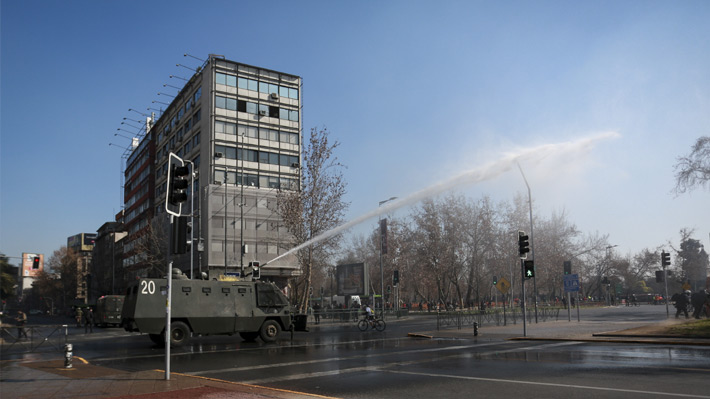
Pelea entre defensores y detractores de marcha antimigrantes terminó con 80 detenidos y una carabinera lesionada
Este domingo Carabineros de Chile informó que más de 400 personas se reunieron en Santiago para manifestarse en contra de la marcha antimigrantes. De acuerdo a lo informado, distintos desórdenes motivaron la intervención de personal de Fuerzas Especiales. 11 de Agosto de 2019 | 18:11 | Redactado por Thomas Heselaars SANTIAGO.- Más de 80 personas fueron detenidas este domingo en torno a una marcha contra la política migratoria del Gobierno de Chile, movilización que pese a que se había suspendido congregó a una veintena de partidarios y a unos 400 contramanifestantes, lo que derivó en enfrentamientos y disturbios. El General Mauricio Rodríguez, jefe de zona metropolitana de Carabineros de Chile, informó que "entre estos detenidos tenemos dos detenidos por portar bombas incendiarias y también elementos para la fabricación de bombas incendiarias. Tenemos detenidos por portar bastones retractiles, por portar armas blancas, por desórdenes graves y por desordenes leves". NOTICIA RELACIONADA Finalmente organizadores suspenden marcha "antimigrante": "Piñera le ha dado la espalda a los ciudadanos honestos" 685 "También, estamos haciendo un levantamiento respecto de qué tipo de daño sufrió el mobiliario público, tenemos algunos vehículos policiales que resultaron con daños y lamentar también las lesiones de una funcionaria de Carabineros que recibió el impacto en su cabeza de un objeto contundente y se encuentra en estos minutos siendo atendida en nuestro hospital institucional", apuntó. Además, el jefe de zona reveló que uno de los detenidos por portar bombas incendiarias tiene 15 años, mientras que el otro 18. Sobre estos incidentes, el General aclaró que "eran detractores de esta marcha que no fue autorizada" y "causaron desórdenes, interrumpiendo el tránsito vehícular y causando daño al mobiliario público en distintos sectores de la capital, lo que motivó que Fuerzas Especiales de Carabinero actuara para reestablecer el orden". NOTICIA RELACIONADA Intendencia no autoriza marcha antimigrantes: "No reúne las condiciones para garantizar el cuidado de nuestros ciudadanos" 1123 Por último, Rodríguez comentó que "Carabineros de Chile tenía un servicio preventivo desplegado con la finalidad de minimizar los eventuales desórdenes que pudieran desarrollarse".
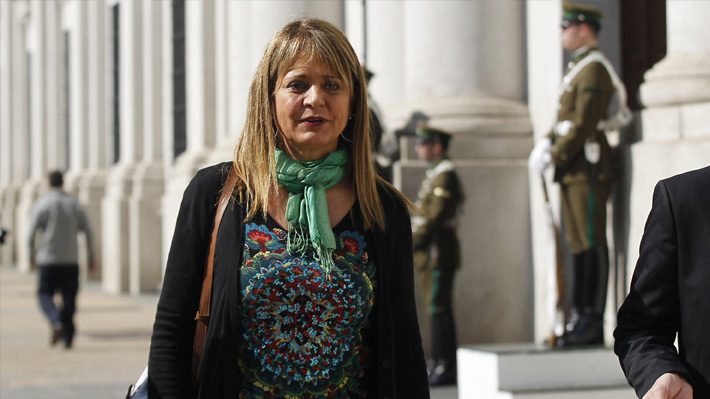
Jacqueline van Rysselberghe cuestiona apoyo de RN a proyecto de 40 horas: "Yo lo encuentro súper irresponsable"
La presidenta de la UDI y actual senadora se refirió al proyecto presentado por el Partido Comunista y criticó que es "absolutamente inconstitucional". 11 de Agosto de 2019 | 11:48 | Redactado por Thomas Heselaars SANTIAGO.- Este sábado la presidenta de la UDI y senadora Jacqueline van Rysselberghe cuestionó la decisión de Renovación Nacional al apoyar el proyecto de rebajar a 40 horas la jornada laboral semanal, presentado por Camila Vallejo. Sobre esto manifestó que "lo encuentro súper irresponsable". En el programa de TVN, Estado Nacional, van Rysselberghe detalló que "no quiero ponerle populista porque me van a retar, pero al menos irresponsable. Porque el proyecto del Partido Comunista es absolutamente inconstitucional". NOTICIA RELACIONADA Flexibilidad laboral versus 40 horas: ¿Pierde el Gobierno la batalla comunicacional ante el proyecto de Camila Vallejo? 700 Además, la presidenta de la UDI comentó que "no puede el parlamento estar generando leyes que erogan gastos fiscal. Es decir, que se gasta plata del fisco, sin la autorización del fisco. Eso es inconstitucional por donde tu lo mires". Sobre el proyecto presentado por el Gobierno, manifestó que "yo creo que se le debió haber puesto urgencia mucho antes porque el proyecto del Gobierno es bueno que lo hagan en tres meses. Encuentro que está bien que haya flexibilidad horaria, eso es lo moderno". "Lo curioso de esto es que la Cámara de Diputados no puede estar aprobando cosas que son inconstitucionales. Yo creo que hay tiene que ver cierta responsabilidad institucional" declaró. También, la senadora advirtió que considera una mala señal fusionar ambos proyectos. Por otro lado, la legisladora comentó que para "poder tener un segundo Gobierno consecutivo de nuestro sector requiere de varios factores, no solo de un buen candidato. Requiere de que a este Gobierno le vaya bien, que además no surja alguien extremadamente competitivo al frente, requiere que los liderazgos no se desgasten, por eso creo que es importante cuidarlos a todos. Requiere un montón cosas y todavía falta mucho". Jacqueline van Rysselberghe dedicó minutos para destacar distintos liderazgos. Sobre Joaquín Lavín acotó que "ha logrado posicionarse y tiene un estilo en donde está leyendo bien las necesidades de la gente". Además, reconoció que le pone contenta que el político mejor evaluado sea de su sector. Asimismo, destacó a Gabriel Boric y reconoció que "tiene autonomía. Es un tipo que es capaz de marcar opiniones distintas y decir lo que piensa, desde su mirada, más allá de lo que opine su sector. En ese sentido él es valiente. Su actuación pública me hace impresión".
/https://www.thestar.com/content/dam/thestar/politics/federal/2019/09/12/as-trudeau-skips-first-debate-may-and-singh-take-aim-at-scheer/debate.jpg)

/https://www.thestar.com/content/dam/thestar/politics/federal/2019/09/11/poll-shows-conservatives-hold-a-slight-lead-as-the-campaign-begins/andrews_scheer.jpg)


/https://www.thestar.com/content/dam/thestar/politics/federal/2019/08/25/new-book-assesses-trudeau-governments-record-of-living-up-to-pledges/trudeau.jpg)
/https://www.thestar.com/content/dam/thestar/politics/federal/2019/08/24/majority-or-bust-scheers-path-to-power-gets-murkier/scheer004.jpg)
/https://www.thestar.com/content/dam/thestar/opinion/star-columnists/2019/08/24/liberals-should-be-ashamed-for-dredging-up-andrew-scheer-same-sex-marriage-speech/andrew_scheer_2.jpg)
/https://www.thestar.com/content/dam/thestar/calgary/2019/08/25/chelsea-williamson-became-the-test-case-for-new-airline-passenger-rules-advocates-say-cases-like-hers-are-the-new-norm/chelsea_williamson.jpg)


/https://www.thestar.com/content/dam/thestar/news/gta/2019/08/26/hearings-set-to-begin-in-landlords-appeal-over-toronto-rules-for-airbnb-other-short-term-rentals/_1_serena_purdy.jpg)
/https://www.thestar.com/content/dam/thestar/news/gta/2019/08/25/chinatown-bends-without-breaking-to-newcomers-and-gentrification/_1tonny_louie_2.jpg)
/https://www.thestar.com/content/dam/thestar/sports/bluejays/2019/08/24/i-do-it-out-of-love-for-2-generations-vladimir-guerrero-jrs-grandmother-has-been-making-comfort-food-for-latin-american-ballplayers/altagracia_alvino5.jpg)
/https://www.thestar.com/content/dam/thestar/news/canada/2019/08/26/i-cant-believe-it-cat-back-in-barrie-home-after-neighbour-dumped-him-in-wild-32-days-ago/cat_hug.jpg)